
5 Dec 2025
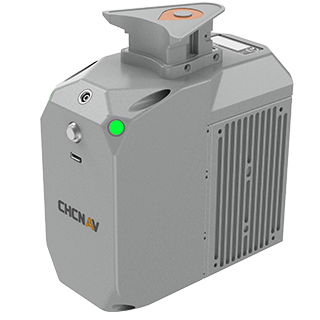
Over the past two decades, GNSS technology has transformed how we survey the world, delivering centimeter-level accuracy in open environments. But in real-world conditions like urban canyons, dense vegetation, or narrow alleys, traditional receivers often fall short. CHC Navigation's new ViLi i100 Vision-LiDAR GNSS RTK Receiver addresses these limitations. By fusing GNSS, LiDAR, multi-camera vision, and a high-frequency IMU, it delivers high-precision positioning even where satellite signals are weak or unavailable, redefining what is possible in reliable field surveying.
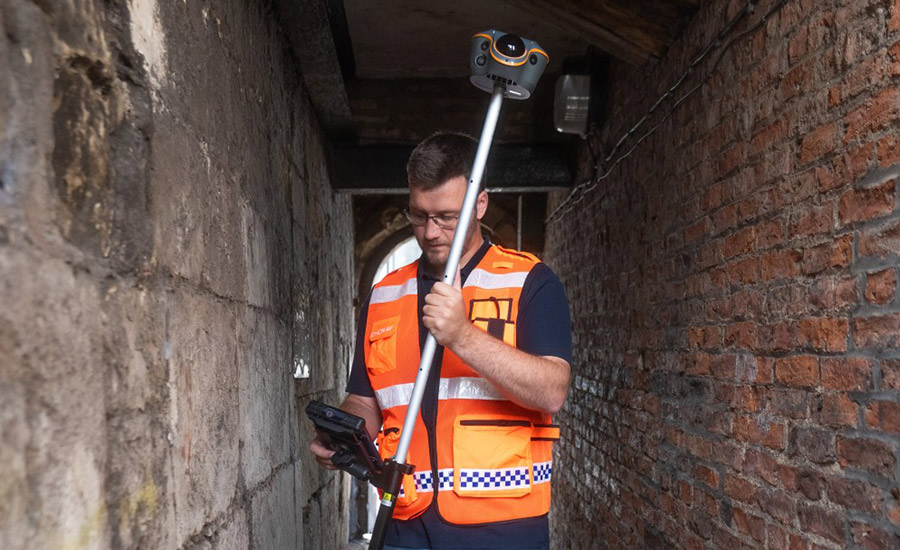
For decades, Global Navigation Satellite System (GNSS) has been the foundation of precision mapping, offering centimeter-level accuracy under open skies. However, real-world environments are rarely ideal. Urban canyons, dense tree cover, and narrow passageways create signal obstructions and multipath interference, leading to jumps in position, degraded accuracy, and the loss of fixed solutions. As a result, surveyors often resort to repeated measurements or switch to slower alternatives like total stations.
Previous efforts to address these challenges have provided only partial relief. IMU-based tilt compensation and advanced signal filtering improved usability but did not overcome the root issue of complete signal loss in obstructed areas. Technologies like photogrammetry and laser ranging served niche scenarios yet often operated in disconnected workflows.The industry has long needed a breakthrough: a GNSS system that can maintain survey-grade precision even when satellite visibility is compromised.
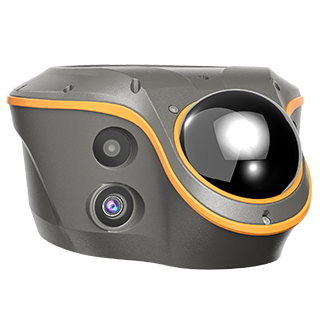
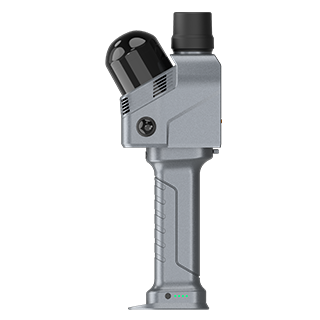
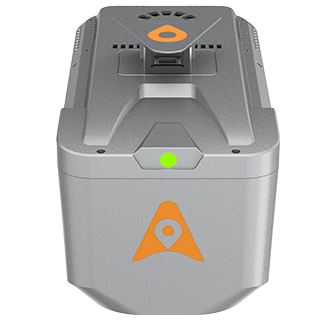
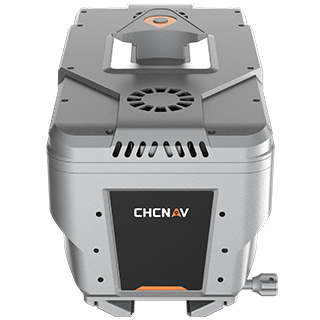
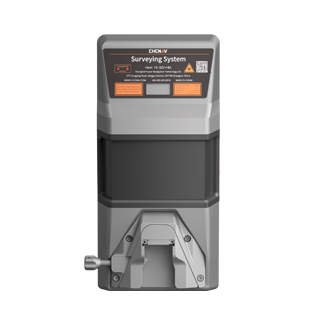
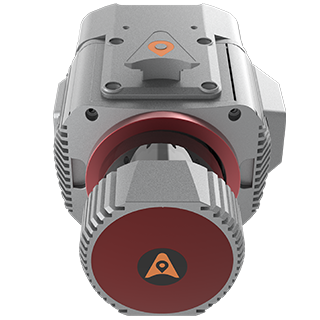
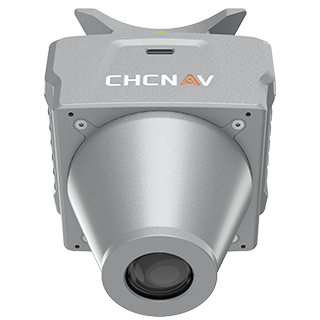
The CHCNAV ViLi i100 is more than a GNSS receiver. It is a fully integrated Visual-LiDAR GNSS RTK system that represents a new standard in high-precision positioning. Built around the advanced SFix 2.0 engine, it goes far beyond the capabilities of earlier technologies. By intelligently combining GNSS, high-frequency IMU, LiDAR, and multi-camera data, the ViLi i100 delivers consistent, dependable accuracy even in places where traditional GNSS systems cannot function. It is designed to keep surveyors working without interruption, regardless of signal conditions.
The ViLi i100's key innovation is its ability to maintain a stable, jump-free position with consistent 5 cm absolute accuracy, even in difficult conditions.
This is made possible by a multi-sensor fusion engine that analyzes incoming satellite signals in real time and automatically filters out those affected by multipath errors. The result is a reliable, single-point position that surveyors can trust without question.This level of consistency eliminates the frustration of unreliable fixes and provides a new level of confidence in data collection, even in areas with partial sky visibility.
The ViLi i100 stands apart when GNSS signals are completely lost. Whether under bridges, inside short tunnels, or in deep excavations, the SFix 2.0 engine maintains survey-grade accuracy by referencing the last trusted GNSS position. Using its high-density LiDAR scanner, which captures 860,000 points per second, and advanced positioning algorithms, the system calculates current positions based on the surrounding environment. This enables continued 5 cm accuracy within a 20-meter radius of the last GNSS fix, even during total signal blackouts.
Trained and validated on thousands of real-world datasets, SFix 2.0 removes the need to switch to total stations for short-distance measurements in obstructed areas. It creates a seamless experience that brings GNSS reliability to environments once considered unreachable.
With integrated Vi-LiDAR technology, the CHCNAV ViLi i100 enhances safety and efficiency by allowing non-contact data collection from points that are inaccessible or hazardous. Unlike photogrammetry, which requires extended processing time, or laser rangefinders that demand precise manual alignment, the ViLi i100 enables fast and accurate 3D coordinate extraction.
Surveyors can batch-select target points through the software interface for instant measurements. An 8-megapixel telephoto camera provides clear visual confirmation up to 15 meters, ensuring 5 cm accuracy. This reduces the risk of manual errors, eliminates vibration-related inaccuracies, and speeds up the capture of difficult features like overhead structures, building corners, or assets across traffic lanes.
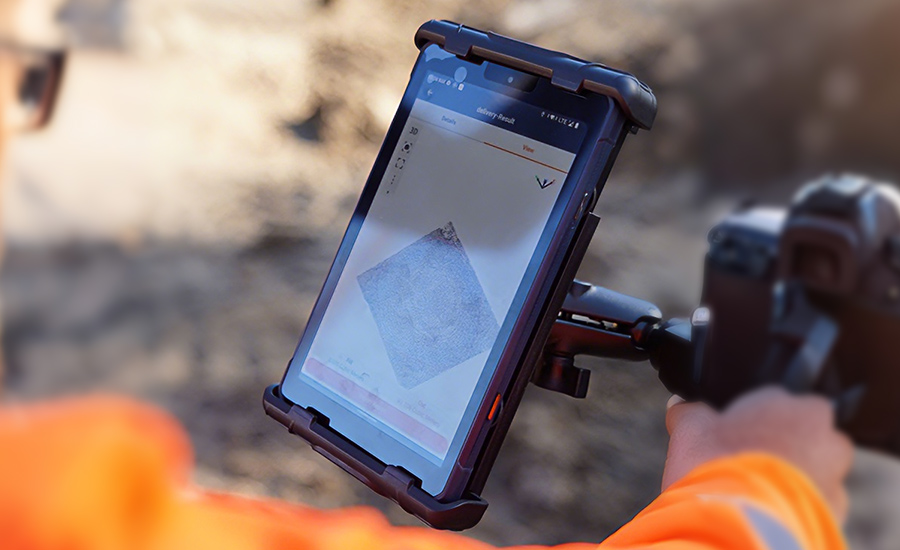
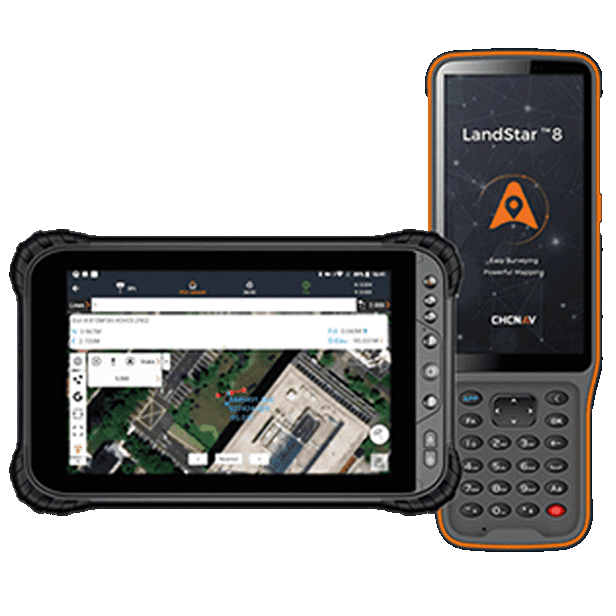
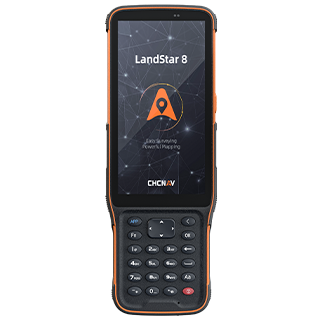
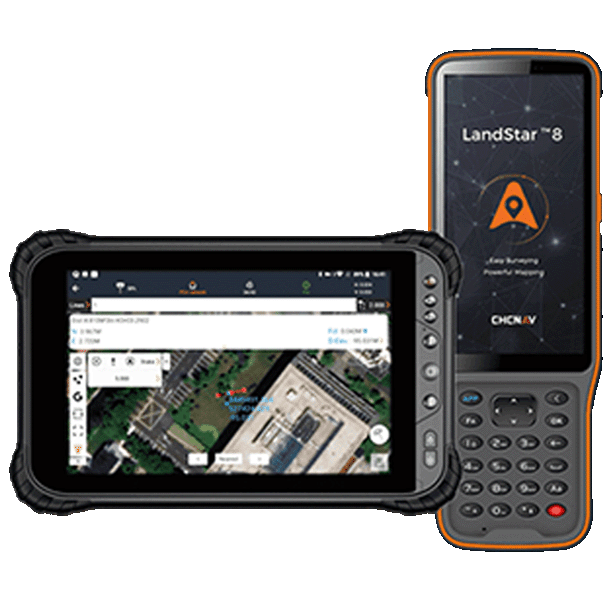
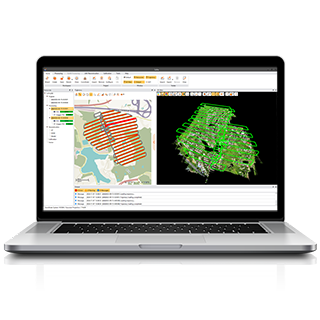
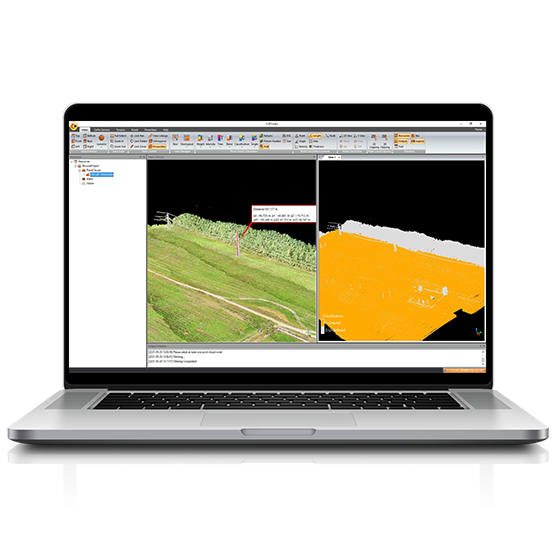
When paired with CHCNAV's LandStar8 field software, the ViLi i100 becomes a powerful tool for on-site earthwork management. A quick scan of stockpiles or excavation zones generates a dense 3D point cloud, from which users can define boundaries and instantly receive accurate cut-and-fill calculations. This real-time processing capability enables immediate validation and decision-making in the field, eliminating the delays of office-based post-processing.It simplifies workflows and brings efficient volume computation directly to the job site.
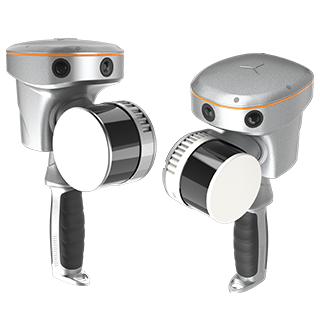
CHC Navigation development of the ViLi i100 builds on years of experience in GNSS chipset design, LiDAR technology, and photogrammetric algorithms.Following the success of the RS10 SLAM scanner, which introduced SFix 1.0 to maintain accuracy for up to one minute after GNSS loss, the ViLi i100 advances the concept with SFix 2.0. SFix 2.0 integrates high-precision IMU data, visual recognition, and dynamic LiDAR point cloud generation to construct a stable spatial reference frame. This synergy with GNSS ensures positional stability and maintains $5 cm absolute accuracy within a 20-meter radius of the last known position, even without satellite signals.
The system also introduces unique capabilities. With full 360-degree tilt compensation, the ViLi i100 allows measurements at any angle, including inverted use for ceiling points,surpassing the typical tilt limits found in standard receivers.
| Parameter | CHCNAV RS10 | CHCNAV ViLi i100 |
|---|---|---|
| Product Positioning | Multi-purpose SLAM scanner with surveying capability | Flagship GNSS receiver with integrated multi-sensor fusion |
| Core Technology | SFix 1.0 | SFix 2.0 |
| GNSS-Denied Performance | Maintains 5 cm accuracy for up to 1 minute | Maintains 5 cm accuracy within 20 m radius continuously |
| Non-Contact Measurement | Supported | Enhanced for fast, survey-grade workflows |
| Real-time Volumetrics | Supported, with post-processing | Instant on-site results |
| Primary Design Focus | Large-scale 3D modeling, with basic survey support | High-precision surveying and stakeout in complex conditions |
| Parameter | Standard GNSS RTK | CHCNAV Vili i100 |
|---|---|---|
| Product Positioning | IMU-fused GNSS receiver, limited sensor integration | Fully integrated visual, LiDAR, and GNSS system |
| Severe Obstruction | Accuracy heavily degraded | Maintains consistent accuracy |
| GNSS-Denied Environment | Generally unusable | Sustained 5 cm accuracy within 20 m radius |
| Non-Contact Measurement | Available in select models | Optimized with faster, multi-point capture |
| Real-Time Volume Calculation | Requires multiple measurements | Immediate field output |
| Tilt Compensation | Limited (60°–120°) | Full 360° support including inverted use |
The CHCNAV ViLi i100 sets a new benchmark for GNSS receivers by combining advanced multi-sensor fusion with user-driven innovation. It directly addresses long-standing pain points in the field, offering consistent 5 cm accuracy even in environments where satellite signals are obstructed or lost.
For professionals in surveying, construction, or government sectors, the ViLi i100 delivers measurable gains in efficiency, safety, and reliability. It reflects CHC Navigation ongoing commitment to solving real-world challenges through precision technology.With the CHCNAV ViLi i100, the future of dependable, all-environment positioning is already here.
CHC Navigation (CHCNAV) develops advanced mapping, navigation and positioning solutions designed to increase productivity and efficiency. Serving industries such as geospatial, agriculture, construction and autonomy, CHCNAV delivers innovative technologies that empower professionals and drive industry advancement. With a global presence spanning over 140 countries and a team of more than 2,000 professionals, CHC Navigation is recognized as a leader in the geospatial industry and beyond. For more information about CHC Navigation [Huace:300627.SZ], please visit: www.chcnav.com
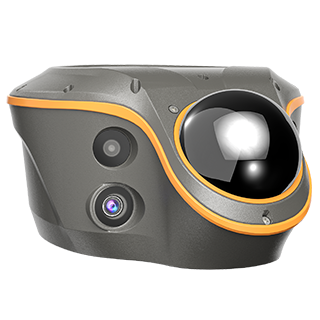
CHCNAV ViLi i100
Visual-LiDAR GNSS RTK receiver with consistent accuracy in obstructions
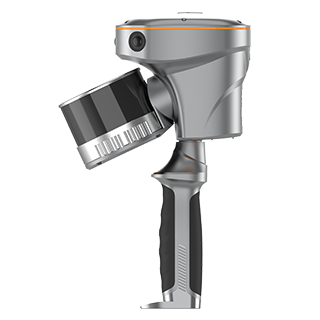
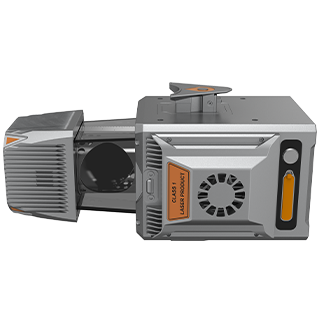
CHCNAV RS10
Handheld SLAM 3D Laser Scanner + GNSS RTK
CHCNAV LandStar
Land Surveying and Mapping App






.png)